Matutina
The Man Who LaughsMatutina is a Biscayan hooker whose voyage begins as a concealed escape from Portland Bay and ends with the vessel sinking beneath its passengers. The ship’s changing condition gives the journey its shape: first a means of flight, then a wreck driven by wind and waves, and finally a sinking vessel in a deceptive calm. Its fate turns the fugitives’ departure into a sustained encounter with the limits of human control.
Design and departure
The vessel is moored close to a cliff in a creek on the coast of Portland Bay. The inlet is dangerous in many conditions, and its risks make it a useful hiding place for ships. On the evening of departure, however, the water is calm. The ship is identified as a Biscayan hooker, and its name, Matutina, is written in gilt capitals beneath a figure of the Virgin on the bow. A lantern below the figure can both illuminate it and serve as a beacon, but it is unlit, a precaution that fits the voyagers’ need to remain concealed.
The ship’s bow is elaborately decorated: its long, curved cutwater projects ahead, and a gilded kneeling angel looks toward the horizon through a spyglass. The vessel’s appearance therefore combines ornament with practical features. Its lantern can guide a ship as well as adorn the figurehead; the cutwater is pierced so that waves can pass through it. These details distinguish the boat before the narrative follows it into waters where appearance and speed offer little protection.
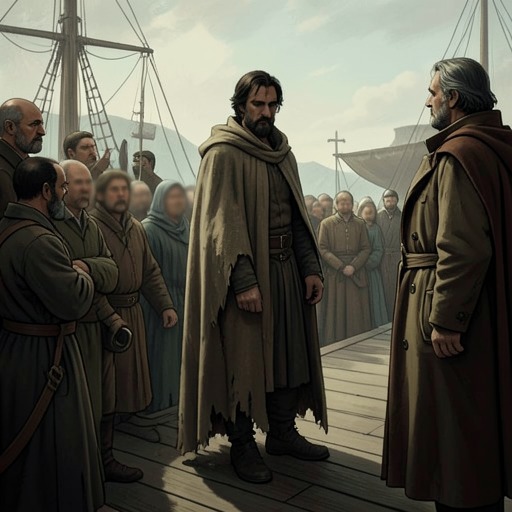
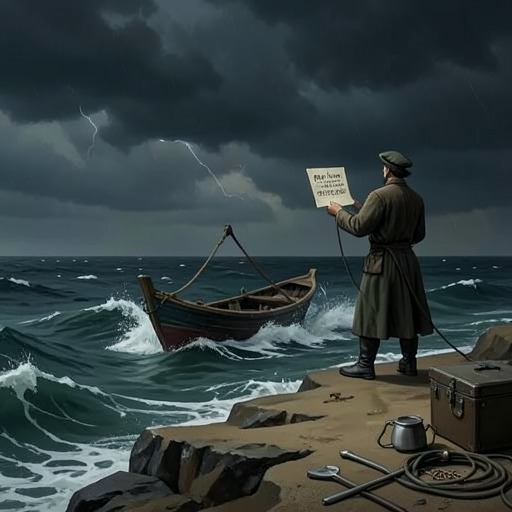
The departing group transfers its provisions and belongings from shore over a plank. Their stores include biscuit, stock fish, portable soup, fresh water, malt, tar, ale, and material for torches and signals, alongside trunks and work equipment. The cargo suggests that the passengers are leaving with the necessities of an itinerant life, not simply making a brief crossing. Once the chief and captain part, Matutina leaves the gulf. It crosses Shambles Shoal, a hidden obstruction at the entrance to Portland roads, and continues out to sea.
Flight and loss of control
A north wind allows the captain to set all sail and drive the hooker away from England. The passengers welcome the vessel’s quick progress and celebrate their flight, while the doctor remains apart from their excitement. The departure is also marked by a separation on shore: a child watching from a distant cliff loses sight of the ship as it travels south, while the child goes north. The vessel’s movement away from the coast thus divides the shipboard fugitives from the figure left behind.
The favorable wind does not last as a guarantee of safety. When the crew receives orders to prepare the vessel for the storm, the passengers and sailors furl the sails, secure the rigging, reinforce the supports, and close the ports and bull’s-eyes. The hooker is stripped of its canvas, but the storm intensifies. Its topsails tear away, the deck is swept clear, the shrouds and mast are lost, and further waves carry off the compass, the boat, the spritsail yard, the figurehead, and the signal light. The losses remove both working equipment and visible marks of the vessel’s identity.
The crew drops its single anchor, but the hard seabed and force of the waves cause the cable to snap. From then on, Matutina is described as a wreck: it can no longer sail or carry out reliable maneuvers, and it drifts at the mercy of the water. Its hull remains watertight for a time, despite a broken pump, and that condition delays the end. The distinction matters to the sequence of the disaster: the ship has lost its rigging and control, but it has not yet taken water into the hold.
The sinking
After the vessel has passed through the dangerous waters of the voyage, a hole is found in its keel and a leak has begun. The crew cannot establish exactly when the damage occurred. Contact with a hidden rock is considered likely, but the account leaves the precise cause unresolved. One sailor reports that there are two varas of water in the hold and estimates that the ship will sink in less than forty minutes.
By then the storm has given way to a calm. The water rises in the hold as Matutina gradually sinks, without the motion of wind or waves that had marked the earlier crisis. The vessel’s descent is presented as slow and measurable; the people aboard can calculate that its disappearance is approaching. The shift from violent weather to stillness changes the character of the danger but does not relieve it. The ship is no longer being driven through the sea; it is being drawn down as water accumulates inside it.
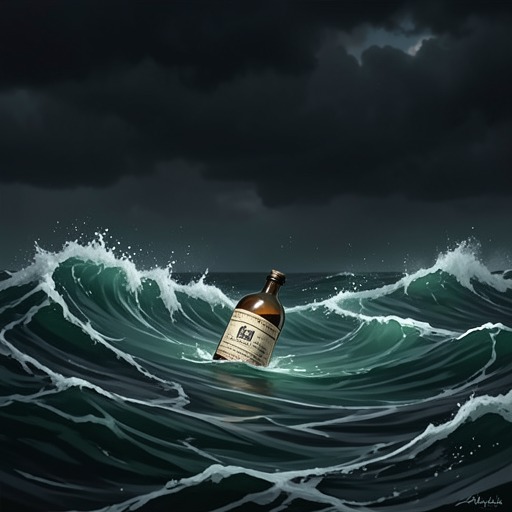
At the end, the doctor looks down and finds that everyone’s heads are under water: the passengers have drowned while kneeling. He takes a flask that had been placed on the companion and raises it above his head as the wreck continues to sink, murmuring the remainder of a prayer. Matutina’s final scene therefore joins the ship’s physical disappearance to the last act of the doctor, without depicting any rescue or escape.
Narrative significance
Matutina’s voyage is organized by reversal. Its speed initially makes escape seem possible, and its passengers respond to progress as if distance from England were enough to secure their future. The storm then strips the ship of sails, mast, compass, boat, and figurehead, turning a mobile vessel into an object carried by the sea. Later, the calm makes the final danger less visibly violent but no less certain. The ship’s changing capacity—from sailing, to drifting, to sinking—provides the concrete structure for that progression.
The vessel also carries the contrast between concealment and exposure. It leaves a dangerous creek under cover of darkness, with its lantern extinguished; later, the storm removes the figurehead and signal light, while damage beneath the waterline goes unnoticed until the leak is discovered. Matutina’s name is conspicuous in its gilded position at departure, but the end of the voyage is defined by the ship’s inability to remain afloat. Its loss is not merely a change of setting: it closes the fugitives’ attempted passage with a collective drowning and leaves the doctor’s prayer as the last recorded human action aboard.